Gold ETF vs Physical Gold: Which Is Actually Better for You in 2026?
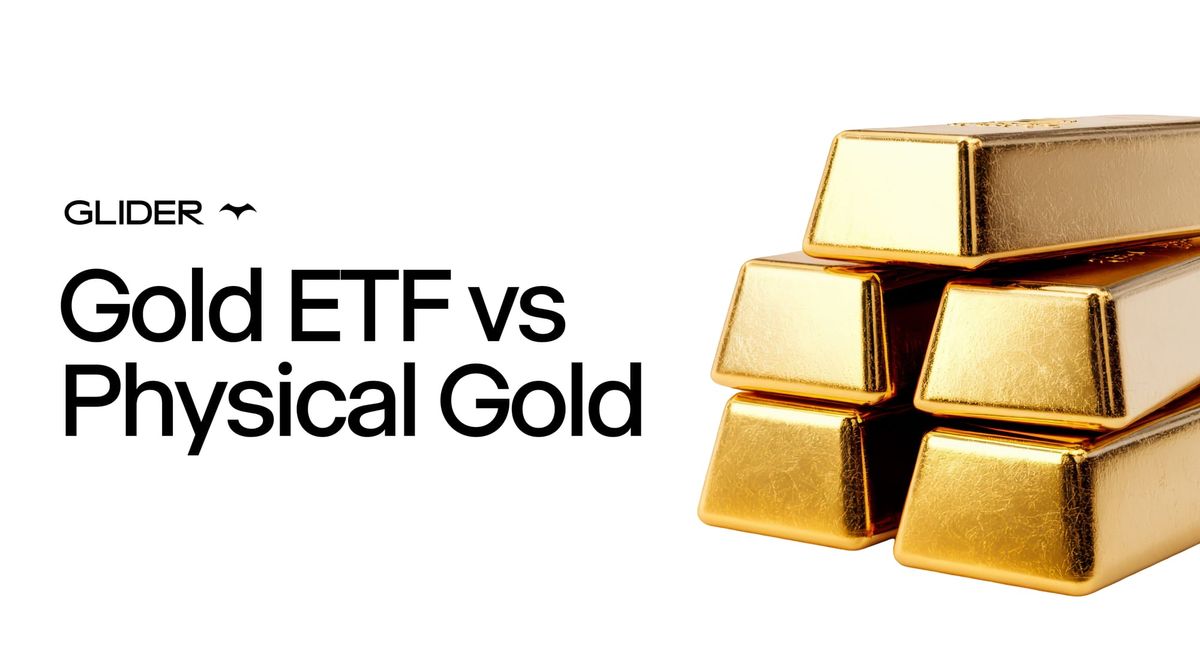
Gold has been money for roughly five thousand years, and for most of that history owning it meant holding it—a coin in a pocket, a bar in a vault. Only in the last forty years has gold become a stock-market product you can add to your portfolio in one click without ever seeing the metal it represents, and that shift is the reason the gold ETF vs physical gold question exists in the first place.
If you're weighing those two options today, you're really choosing between two different relationships with the same underlying asset. One is convenient, cheap, and designed to fit seamlessly into a modern portfolio. The other is tangible, independent, and built on the premise that there should be nothing standing between you and what you own. Neither is objectively better, and the right answer depends less on the mechanics than on what you're actually trying to accomplish.
Here's the full picture.
Why people buy gold in the first place
Before the mechanics, it's worth being honest about the goal, because the gold ETF vs physical gold debate collapses most cleanly when you know what you're solving for. Some investors want an inflation hedge—an asset that holds purchasing power when currencies weaken. Others want a diversifier, because gold historically moves differently than stocks and bonds and can smooth out the ride during equity drawdowns. Some want a store of value that sits outside the banking system, on the premise that if something ever goes seriously wrong with that system, they'd rather hold something the system can't touch. And many simply want exposure to gold's price without thinking too hard about the plumbing.
Those goals pull in different directions, which is why the gold ETF vs physical gold question isn't really one question—it's two hiding inside the same search bar. The answer for the investor who wants liquid exposure looks nothing like the answer for the investor preparing for a currency crisis, and conflating them is how most guides on this topic end up unhelpful.
The case for a gold ETF
A gold ETF is a fund that trades on a stock exchange and gives you exposure to the price of gold, usually by holding real gold bars in a vault through a regulated custodian who handles the logistics on your behalf. Each share you buy represents a proportional slice of the gold the fund owns—no dealer to visit, no safe to buy, no insurance policy to maintain, no buyer to find when you want to sell.
The appeal, especially for investors building a diversified portfolio, is how little friction sits between decision and execution. Annual costs usually fall between 0.15% and 0.40%, trading spreads are tight, and the fund tracks the spot price of gold almost exactly. If your goal is to hold five or ten percent of a balanced portfolio in gold as a diversifier, an ETF is almost always the right tool—the operational simplicity compounds quietly over years in ways physical ownership can't match.
The catch is philosophical rather than financial. When you buy an ETF share you don't own gold; you own shares in a fund that owns gold on your behalf, and between you and the metal sits a custodian, an issuer, and a market that has to be open for you to do anything with your position. Most of the time that chain is invisible. In rare moments, it matters.
There's also a practical wrinkle that goes unmentioned in most US-focused guides: the deepest, cheapest gold ETFs are listed in the United States, which means investors outside the US often can't access them without opening a foreign brokerage account or paying currency conversion costs that eat into returns. This is where onchain versions of traditional ETFs have started to change the math—tokenized wrappers that hold the same underlying fund shares but can be bought and held from anywhere with an internet connection. Platforms like Glider make that path accessible: you fund an account with cash or crypto, pick a gold allocation, and the rest is handled. For investors who want ETF exposure but can't easily get it through traditional channels, it's a meaningful unlock that didn't exist a couple of years ago.
The case for physical gold
Physical gold means bullion—bars, rounds, or sovereign coins minted to investment-grade purity, which generally means 99.5% or higher. Jewelry and collectible coins fall into a different category, because you pay markups for design, labor, or rarity that have nothing to do with gold content and that you'll almost never recover on resale. If what you want is exposure to the metal itself, bullion in standard weights is the form that delivers it.
What physical gold gives you that no fund can replicate is genuine independence. The bar in your safe is yours whether the stock market is open, closed, or frozen, and it remains yours regardless of whether any particular financial institution stays solvent. For investors whose core goal is hedging against a breakdown of the financial system itself—a tail risk most investors rightly consider unlikely but some take seriously enough to prepare for—that independence is the entire point, and no paper claim on gold substitutes for it.
What you pay for that independence is friction at every stage of ownership. Dealer premiums over spot typically run one to five percent, storage costs something whether you use a home safe or a professional vault, and insurance costs extra on top. Selling is slower and messier than selling an ETF share: you find a buyer, negotiate, and accept a spread meaningfully wider than anything you'd see on an exchange. Over decades those costs shrink as a share of total return; over shorter horizons they add up in ways first-time buyers often underestimate.
A third option: actual onchain gold
In recent years a genuinely new form of gold exposure has emerged, distinct from both traditional ETFs and physical bullion. Tokenized gold—the best-known examples are Tether Gold (XAUt) and PAX Gold (PAXG)—consists of digital tokens issued on public blockchains and backed one-to-one by physical gold bars held in professional vaults. Each token represents a specific quantity of allocated gold, meaning the bar isn't pooled with other investors' gold but individually assigned to the token holder. The result is that you get the direct ownership character of physical gold combined with the liquidity and portability of a digital asset.
For investors who want genuine gold ownership without the logistics of bullion, tokenized gold closes a gap that didn't have a good answer before. You avoid dealer premiums, storage overhead, and insurance costs while keeping the underlying promise that made physical gold appealing in the first place—that you hold a direct claim rather than a share in a managed fund.
The simpler question is how to hold any of this together in one place. Whether you want a tokenized ETF for clean diversified exposure or tokenized gold for direct ownership, Glider removes most of the decision-making friction—you fund the account with cash or crypto, pick the allocation that fits what you're trying to accomplish, and the platform handles the mechanics of buying, holding, and rebalancing. Instead of choosing between an ETF you can't easily access and physical gold you don't want to store, you get both kinds of exposure in a form that fits the rest of your portfolio.
Gold has always been about one thing: owning something real. The ETF made that easier for most people. Tokenized gold makes it possible for everyone, without a dealer, without a safe, and without a brokerage account that may or may not let you in. The version of gold ownership that actually fits how people invest today already exists. It just took a while to build the rails for it.
Frequently Asked Questions
Is a gold ETF safer than physical gold?
Neither is inherently safer. A gold ETF carries counterparty risk, meaning your exposure depends on the fund issuer and custodian staying solvent. Physical gold carries storage and theft risk. The right choice depends on what you're actually trying to protect against.
Can I convert a gold ETF to physical gold?
Most retail gold ETFs don't offer physical redemption to individual investors. That option is typically reserved for large institutional participants. If direct ownership matters to you, physical bullion or tokenized gold are more straightforward routes.
What is tokenized gold and how is it different from a gold ETF?
Tokenized gold like XAUT or PAXG is a digital token backed one-to-one by physical gold held in a professional vault. Unlike an ETF, you hold a direct claim on allocated gold rather than shares in a fund. It trades 24 hours a day and doesn't require a brokerage account.
Can I hold gold ETFs and physical gold in the same portfolio?
Through traditional brokers, no. On Glider you can hold tokenized versions of both alongside crypto and other assets in one automated portfolio.